K-beauty prices can look very different depending on whether you shop in Korea or the US.
One of the most common assumptions about K-beauty is simple:
If you buy it in Korea, it must be cheaper.
That sounds reasonable.
Korean brands are sold in their home market, and Korean beauty retailers are famous for discounts, double sets and Olive Young-exclusive packages.
But once I started comparing actual prices, I found that converting Korean won into dollars was not enough.
A serum sold as one 50ml bottle in the US might also be available in Korea as a 50ml bottle with a full-size refill.
A toner sold as one 250ml bottle in the US might appear in Korea as a 250ml × 2 set.
And a product that looks dramatically cheaper in Korea today may show a smaller gap once I compare regular prices instead of temporary sale prices.
So I wanted to answer a more useful question:
How much cheaper is K-beauty actually in Korea when I compare the exact product, the amount you receive and the price shoppers can really pay?
For this comparison, I used Olive Young Korea and Olive Young US.
That does not eliminate every difference between the two markets. Shipping, taxes, logistics, local pricing policies and promotions can still vary.
But it reduces one major variable: I am not comparing completely unrelated retailers with different merchandising strategies.
Olive Young’s expansion in the US also makes this comparison more relevant than it used to be. I previously looked at the K-beauty brands entering Sephora through Olive Young, but here I wanted to compare what shoppers actually pay inside the Olive Young ecosystem itself.
Price check: August 29, 2026
Exchange rate used: 1 USD = 1,381 KRW (Investing.com, August 29, 2026)Prices, promotions and stock status can change after publication.
What the Prices Looked Like
| Product | Korea | Korea equivalent | Olive Young US | Korea cheaper by |
|---|---|---|---|---|
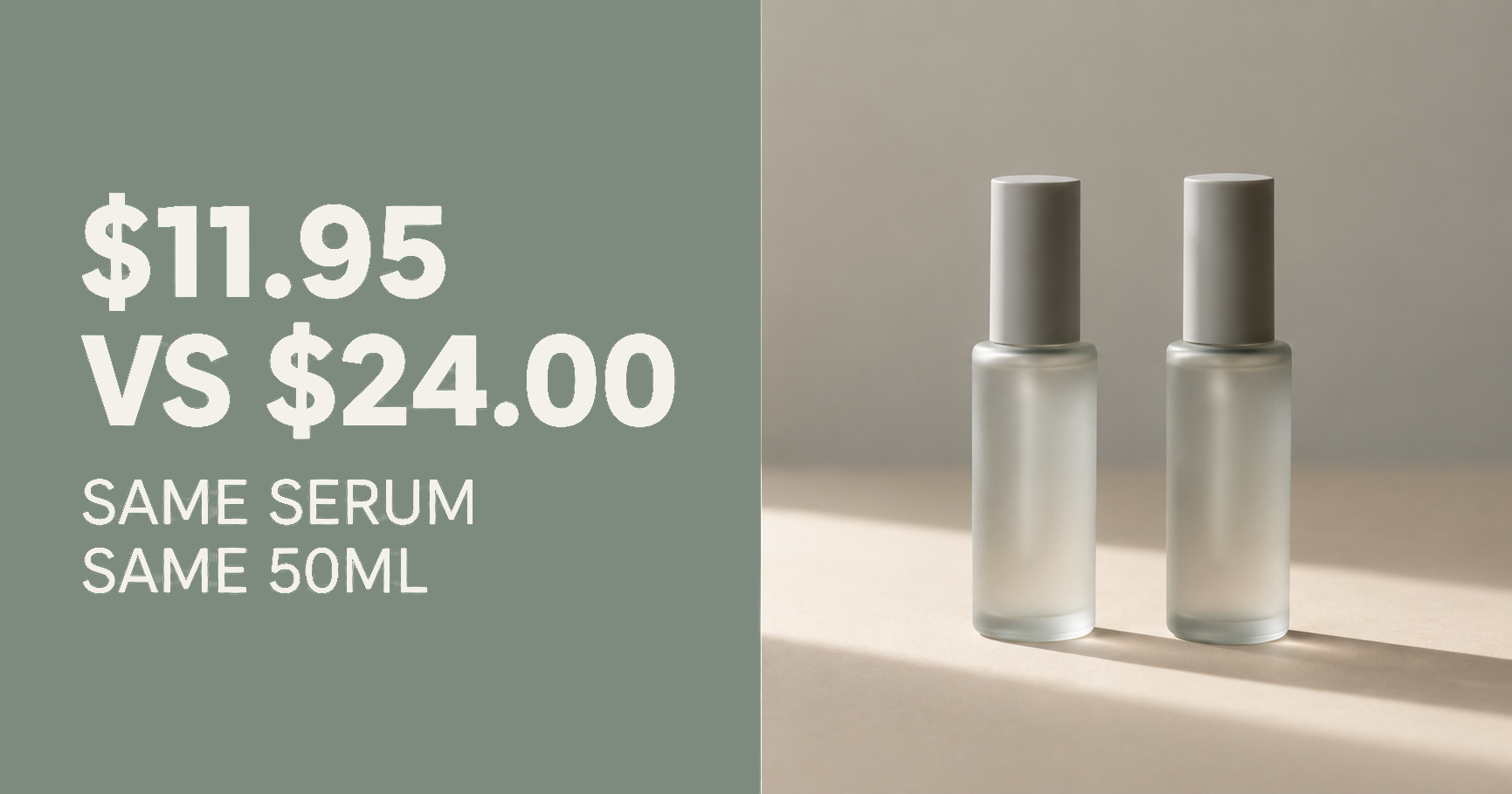
| Torriden Dive-In Serum 50ml | ₩16,500 | $11.95 | $24.00 | 50.2% |
| ma:nyo Pure Soybean Cleansing Oil 200ml | ₩19,900 | $14.41 | $17.00 | 15.2% |
| BANILA CO Clean It Zero Original 100ml | ₩15,600 | $11.30 | $21.00 | 46.2% |
| Anua Heartleaf 77 Toner 250ml equivalent | ₩37,500 for 250ml × 2 | $13.58 / 250ml | $21.00 / 250ml | 35.3% |
At current prices, Korea was cheaper in every comparison.
But the more useful finding was not simply that Korea won.
The size of the advantage ranged from about 15% to 50%, depending on the product, the promotion and the pack configuration.
Torriden Had the Biggest Straightforward Price Gap
The clearest same-size comparison was the Torriden Dive-In Low Molecular Hyaluronic Acid Serum 50ml.
On Olive Young US, the 50ml bottle was:
$24.00
There was no separate sale price displayed on the individual product page when I checked.
On Olive Young Korea, the same 50ml serum was:
Regular price: ₩22,000
Current price: ₩16,500
At 1,381 won per dollar:
₩16,500 = about $11.95
So for the same 50ml amount:
- Korea: $11.95
- US: $24.00
The Korean current price was approximately 50.2% lower.
Put another way, the US price was about 2.01 times the Korean price.
That is already a large gap.
But the more important question is how much of that gap comes from the Korean sale.
Torriden’s 50% Gap Shrinks When I Remove the Sale
There is an important second layer.
If I compare regular prices instead of the Korean sale price, Torriden looks different.
Korean regular price:
₩22,000 = about $15.93
US regular price:
$24.00
That makes the Korean regular price approximately 33.6% lower.
Still cheaper.
Still a meaningful difference.
But not 50%.
That means the observed gap had at least two parts:
a Korea-US price difference, plus the Korean promotion running when I checked.
A screenshot showing “50% cheaper in Korea” may therefore be accurate on one particular day without representing the persistent price difference.
ma:nyo Shows What Happens When the US Is Also on Sale
The ma:nyo Pure Soybean Cleansing Oil 200ml produced the smallest current-price gap in this comparison.
First, the exact product name matters.
ma:nyo sells multiple cleansing oils with similar names, including a separate Pure Cleansing Oil Deep Clean.
They are not the same formula.
I therefore compared the Pure Soybean Cleansing Oil 200ml specifically.
This SKU distinction is the same reason I separated cleansing-oil products when I looked at which Korean cleansing oils rank above Anua. Similar names are not enough if the formulas are different.
Olive Young Korea showed:
₩19,900
No crossed-out regular price was displayed when I checked.
Converted:
$14.41
Olive Young US showed:
Regular price: $20.00
Current HOT DEAL price: $17.00
So the current-price comparison was:
- Korea: $14.41
- US: $17.00
Korea was approximately 15.2% cheaper.
If I ignored the US HOT DEAL and compared Korea’s displayed price with the US $20 regular price, the Korean advantage would appear to be 27.9%.
That is useful for a separate regular-price comparison, but it is not what a US shopper actually had to pay that day.
A current price should be compared with a current price whenever both are available.
Otherwise the arithmetic may be technically correct and still misleading.
BANILA CO Was Nearly as Dramatic as Torriden
The BANILA CO Clean It Zero Original Cleansing Balm 100ml also showed a large gap.
Olive Young Korea:
Regular price: ₩20,000
Current price: ₩15,600
Converted current price:
about $11.30
Olive Young US:
$21.00
So:
- Korea: $11.30
- US: $21.00
The Korean current price was approximately 46.2% lower.
But again, the regular-price comparison is more moderate.
₩20,000 converts to approximately:
$14.48
Compared with $21 in the US, Korea’s regular price was approximately 31.0% lower.
That is remarkably close to Torriden’s regular-price difference of 33.6%.
So Torriden and BANILA CO both show the same pattern:
the underlying gap was already meaningful, and the Korean promotion widened it further.
Anua Adds a Different Kind of Comparison
Anua was interesting because the Korean listing was not a single 250ml bottle.
On Olive Young US, the Heartleaf 77 Soothing Toner 250ml was listed at:
Regular price: $22
Current price: $21
On Olive Young Korea, I could not find a single 250ml listing when I checked.
Instead, the listing I found was a:
250ml × 2 double set
Total Korean price:
₩37,500
The Korean product page also displayed:
10ml = ₩750
That confirms a total volume of 500ml.
At the exchange rate used here:
₩37,500 = about $27.15
That makes the effective price per 250ml:
$13.58
Compared with the US current price of $21:
- Korea: $13.58 per 250ml
- US: $21 per 250ml
The Korean unit price was approximately 35.3% lower.
Compared with the US regular price of $22, the difference is 38.3%.
No crossed-out regular price was displayed on the Korean page. That said, a double set is itself a promotional configuration, so I would not treat ₩37,500 as an ordinary single-bottle price.
There is one more caveat:
the Korean double set was temporarily out of stock when I checked.
So Anua is not a clean single-bottle-to-single-bottle comparison. It is a unit-price comparison between a Korean double set and a US single bottle.
That distinction matters.
Comparing Each Side’s Regular Price
The current-price table tells me what a shopper would have paid when I checked.
A separate question is what happens when I compare each side’s regular or non-discounted displayed price instead.
| Product | Korea regular price | US regular price | Korea cheaper by |
| Torriden | $15.93 | $24.00 | 33.6% |
| BANILA CO | $14.48 | $21.00 | 31.0% |
| ma:nyo | $14.41* | $20.00 | 27.9% |
| Anua | $13.58*† | $22.00 | 38.3% |
* No crossed-out regular price was displayed on the Korean page; I treated the shown price as the non-discounted displayed price for this comparison.
† Per-250ml equivalent from the Korean 250ml × 2 double set. Because the double set is itself a promotional configuration, this is not the same as a verified Korean single-bottle regular price.
Across these four products, comparing each side’s regular or non-discounted displayed price produced a Korea-side advantage of roughly:
28% to 38%
The average is around one-third.
I would not use four products to claim that all K-beauty is structurally one-third cheaper in Korea.
That would be too broad.
But for these four products, the clustering is notable.
The Korean side remained meaningfully cheaper even when I separated the current-sale comparison from the regular-price comparison.
Then live promotions and double sets widened or narrowed the gap again.
Olive Young Korea Also Shows the Unit Price
There was another small detail that became surprisingly useful.
The Korean product pages I checked displayed a per-10ml price underneath the listing.
For Anua, for example:
10ml = ₩750
That made the 500ml double-set calculation immediately verifiable.
The Olive Young US product pages I checked did not show the same unit-price calculation.
That creates an interesting contrast.
Korean Olive Young often sells the more complicated bundles — refills, doubles and exclusive configurations — but the Korean product pages I checked also gave shoppers a unit-price figure that made those bundles easier to compare.
For this article, I still recalculated the numbers myself so that Korea and the US were measured on the same basis.
But the Korean unit-price display is useful.
Pack Configuration Can Change the Comparison
Price is not the only complication.
Korean retailers frequently sell products in configurations that do not match the US listing exactly.
Anua is the clearest example in this comparison.
Olive Young US listed one 250ml bottle, while the Korean listing I found was a 250ml × 2 double set.
That means comparing the total sticker prices directly would be misleading.
Instead, I converted the Korean set into a comparable 250ml unit price.
This is the rule I use for Korean promotional sets:
More of the same product can be included in the unit-price calculation. An unrelated free gift cannot.
If a set contains two 250ml bottles of the same toner, I can calculate the effective price per 250ml.
If a serum comes with a free sunscreen or toner pad, I do not add the gift’s volume to the serum calculation.
Otherwise, free gifts can make almost any product look artificially cheap.
Korean promotion timing matters too. I explain the broader sale structure in my Olive Young sale guide.
A Promotional Banner Does Not Automatically Mean a Product Is Discounted
There was another trap on Olive Young US.
Promotional banners were visible while I was checking the site.
But that did not mean every product underneath them had an actual product-level discount.
Torriden, for example, showed:
$24.00
with no separate lower sale price on the individual product page when I recorded the comparison.
ma:nyo clearly showed:
$17.00
alongside:
List Price: $20.00
Those are different situations.
So I used individual product-page pricing, not a discount inferred from a homepage, category page or promotional banner.
In a price-comparison article, that distinction matters.
So Is K-Beauty Actually Cheaper in Korea?
For these four products:
Yes — on a unit-price basis, every one was cheaper in Korea at the prices I checked.
But the size of the advantage varied substantially.
At current prices:
- Torriden: 50.2% cheaper
- BANILA CO: 46.2% cheaper
- Anua: 35.3% cheaper per 250ml through the Korean double set
- ma:nyo: 15.2% cheaper
Then the separate regular-price comparison produced a narrower range:
27.9% to 38.3%
That is the more interesting finding.
It does not prove that K-beauty as a whole is one-third cheaper in Korea.
It shows that, across these four examples, a substantial Korea-side gap remained even after I separated regular-price comparisons from day-of-sale comparisons.
Then live promotions changed the result again.
Torriden’s Korean sale widened its current-price advantage from 33.6% at regular price to 50.2% at the price I checked.
The ma:nyo HOT DEAL moved in the opposite direction, narrowing Korea’s current-price advantage to 15.2%.
So I would not summarize this article as:
“K-beauty costs half as much in Korea.”
That is too broad.
A more accurate conclusion is:
For the products I checked, Korea remained meaningfully cheaper, but the size of the advantage depended on the regular price, the promotion and the pack configuration being sold.
When I Would Buy It in Korea
Buying in Korea looks particularly attractive when:
- the exact product has a large base price difference
- Olive Young Korea is running an additional sale
- Korea offers a double set of the same product
- I am already in Korea and do not need to add travel or international shipping costs
Torriden is the clearest example from this comparison.
When I Would Just Buy It in the US
The US option becomes more reasonable when:
- the price difference is relatively small
- the US retailer is also running a promotion
- the Korean set is out of stock
- I only need one bottle instead of a double set
- convenience is worth more than saving a few dollars
ma:nyo illustrates this well.
The Korean bottle was cheaper, but only by about $2.59 at the prices I checked.
That is very different from the Torriden comparison.
What I Would Check Before Comparing K-Beauty Prices
1. Is It Actually the Same Product?
Same brand is not enough.
Similar names can hide different formulas.
2. Is the Size the Same?
A 250ml bottle and a 250ml × 2 set should not appear as though they are identical SKUs.
Calculate the unit price instead.
3. Are You Comparing Current Price With Current Price?
Do not compare a Korean sale with a US list price if the US product is also discounted.
4. Are You Comparing Regular Price With Regular Price?
Keep this as a separate calculation.
It helps show how much of the day-of-purchase gap may come from a temporary promotion.
5. Does the Korean Set Include More of the Same Product?
A double set of the same product can materially change the calculation.
An unrelated gift should not.
6. Is It Actually in Stock?
A great price on an unavailable set is still an unavailable set.
The Bottom Line
The products I checked were cheaper in Korea.
But “cheaper in Korea” was not one consistent number.
At current prices, the advantage ranged from approximately 15% to 50%.
When I separately compared each side’s regular or non-discounted displayed price, the four examples clustered in a narrower range of roughly:
28% to 38%
That does not prove that all K-beauty is one-third cheaper in Korea.
But it does show that, for these products, the Korean advantage did not disappear once I separated temporary sale prices from the regular-price comparison.
Then live promotions changed the calculation again.
Torriden moved from a 33.6% Korean advantage at regular price to a 50.2% advantage at the current Korean sale price.
Anua’s Korean double set brought the effective 250ml cost down to:
$13.58
compared with:
$21 in the US
although the Korean double set was temporarily out of stock when I checked and should not be treated as a standard single-bottle regular price.
And ma:nyo showed the opposite pressure: a US HOT DEAL reduced Korea’s current-price advantage to only 15.2%.
So the biggest lesson was not simply that Korea is cheaper.
It was this:
The sticker price is only the first number.
To understand what Korean shoppers are actually getting, I would compare the exact SKU, the amount, the regular price, the current promotion and the availability.
That is where the real price difference appears.
Methodology
Prices were checked on August 29, 2026.
Exchange rate:
1 USD = 1,381 KRW (Investing.com, August 29, 2026)
For this comparison:
- I matched the same product and size wherever possible.
- When Korea sold a different pack configuration, I clearly identified it and calculated the equivalent unit price.
- I used individual product-page prices rather than assuming a discount from promotional banners.
- I kept current-price and regular-price comparisons separate.
- When no crossed-out Korean regular price was displayed, I identified that limitation rather than assuming an undisclosed list price.
- When a set contained more of the same product, I used the total usable volume for the unit-price calculation.
- Unrelated free gifts did not count toward unit volume.
- Similar products with different formulas were not treated as identical SKUs.
- Stock status was recorded when relevant.
- Prices, promotions and availability can change after publication.
This is a retail-price comparison, not a comparison of product quality or formulation.
Sources
Olive Young US
- Torriden Dive-In Low Molecular Hyaluronic Acid Serum 50ml
- ma:nyo Pure Soybean Cleansing Oil 200ml
- BANILA CO Clean It Zero Original Cleansing Balm 100ml
- Anua Heartleaf 77 Soothing Toner 250ml
Olive Young Korea
- Torriden Dive-In Serum 50ml (Korean)
- ma:nyo Pure Soybean Cleansing Oil 200ml (Korean)
- BANILA CO Clean It Zero Original 100ml (Korean)
- Anua Heartleaf 77 Toner 250ml × 2 Set (Korean)